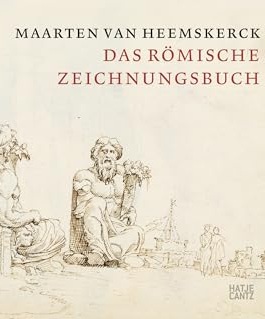
Introduction:
Few objects are more compelling to the art historian than artists’ drawing books. Their particular appeal is the direct access these books provide to private artistic practice: how motifs were observed, drawn, copied and assembled, and, ultimately, how artistic ideas developed. Yet few sixteenth-century Netherlandish drawing books have survived in anything approaching their original form.[1] Maarten van Heemskerck’s (1498–1574) Roman drawing book, compiled during his stay in the Eternal City between 1532 and 1537, is one of the best-known examples. Its 67 drawings encompass a wide range of motifs that the artist encountered in Rome, from antique sculpture and ruins to contemporary works of art. The drawings have long been valued principally as records of Rome’s antiquities and architecture. Although many drawings from this booklet have survived, the book itself has not: its sheets have undergone centuries of dismantling, rearrangement and rebinding, posing longstanding challenges for scholars seeking to reconstruct and understand the drawing book as an object.
This facsimile edition of the drawing book, published in 2024 by Tatjana Bartsch and Christien Melzer, offers a compelling response to these problems. Its important critical reconstruction of the original folio sequence is based on extensive technical, material and visual research. Published in both an English and German edition in the 450th anniversary year of Maarten van Heemskerck death (2024), among multiple exhibitions in both Germany and the Netherlands, the facsimile has received no specific discussion of its own.[2] Yet the edition provides almost tangible access to Van Heemskerck’s personal drawing book as a more or less coherent physical artefact and functioning artistic tool, rather than a collection of loose sheets.
The material history of the Roman drawing book
The complexity of Van Heemskerck’s Roman drawing book lies in its long history of dismemberment and reassembly. A total of 160 drawings entered the Kupferstichkabinett from the collection of Hippolyte Destailleur in 1886 and 1892, bound in two albums.[3] Album I (79 D2) comprised 66 small leaves (c. 135 x 203 mm) that originally formed part of the drawing book considered here. One sheet formerly belonging to this booklet (Rijksmuseum, RP-T-1920-60) is matched by ten additional sheets, never part of the drawing book but pasted into Album I as well, including the engraved title page to Philips Galle’s Disasters of the Jewish People, and Van Heemskerck’s preparatory drawing for that print. Album II (79 D2a) comprises 94 sheets of varying size, with only about one-third by Van Heemskerck. Roughly 37 sheets in Album II likely derive from yet another drawing book, the so-called Mantuaner Skizzenbuch, for some of its copies after designs from Mantua. This drawing book is attributed to Anonymous A, a draftsman who probably had access to Van Heemskerck’s collection of drawings. Still more complexly, drawings by an Anonymous B are also preserved in Album II.[4]
The provenance of the Roman drawing book features continued circulation among artists and collectors. Its first owner, the Amsterdam collector and friend of Van Heemskerck, Jacob Rauwaert, later entrusted the book to Cornelis Cornelisz van Haarlem. Many Haarlem artists, including Hendrick Goltzius, had access to the volume as a source of inspiration, and Karel van Mander likely also leafed through the booklet. In 1639, Pieter Saenredam acquired the volume and replaced its century-old binding. Whether he also altered the sequence of the drawings is unknown, but later collectors and owners certainly did, gradually disrupting the original structure of the booklet. At some point, the panoramic scenes across two pages were also separated, kept as loose sheets mounted into an album with blue pages, which entered the collections of Pierre Crozat and, subsequently, Pierre-Jean Mariette in the eighteenth century. Those drawings were numbered with pen and black ink in 1741 before the auction of Crozat’s collection. At this point the sequence no longer reflected the book’s original order.
By the nineteenth century, the drawings, assembled into what would become Album I, had entered Destailleur’s collection. From there, acquired for Berlin’s Kunstgewerbemuseum, it later transferred to the Kupferstichkabinett in 1886. Album II was acquired from a London antiquarian in 1892. As Album I became increasingly fragile, it was dismantled for conservation in 1980, with its fragile sheets transferred to a new volume, then dismantled again in 2023. This intervention prompted new technical research into the drawings, while Album II remains intact, bound in red Morocco leather.
Canonical predecessors
For more than a century, Christian Hülsen and Hermann Egger’s canonical Die Römischen Skizzenbücher von Marten van Heemskerck im Königlichen Kupferstichkabinett zu Berlin (2 vols., Berlin 1913–16; reissued in 1975), has been the standard reference point for Van Heemskerck’s Roman drawings.[5] Yet neither publication constitutes a true facsimile edition of the drawing book. The first edition reproduced the drawings as individual sheets; then the 1975 edition, although printing the recto and verso conjoined on both sides of the pages, reproduced the 1913-16 facsimile rather than the original sheets, thus still further removed from the original drawing book.[6]
In 2019, Tatjana Bartsch published her extensive study of the whole corpus of Roman drawings, with over 200 autograph drawings, including this drawing book.[7] Bartsch proposed a new sequence of the booklet, based on codicological analysis. This major contribution published its sheets faithfully, at almost actual size, reconstructing the spreads across two pages, and the images were combined with their sources. But since the sheets were then still mounted in Album I, it was impossible to examine the complete structure of the original booklet. Moreover, the structure of the book remained elusive, because reproductions of its original pages necessarily obscured the relationship between recto and verso as well as the sequence and organization of the sheets.
Bartsch & Melzer’s new facsimile-edition
What distinguishes the present edition is its important restoration of the book as a material object. Bartsch and Melzer kept their accompanying commentary to a minimum: a brief eight-page explanation of what the drawing book represents and which techniques are used, all placed at the back of the volume. This layout allows the reader to encounter the facsimile chiefly as a book. It reproduces the 67 drawings in the same orientation and almost the same size and as the original drawing book: it exceeds the original dimensions (c. 135 x 215 mm) by only one centimeter (ca. 140 x 220 mm; with cover 150 x 230 mm) – a deliberate editorial decision intended to preserve the original, characteristic edges of the sheets. Such careful attention to material properties characterizes the facsimile throughout, as the surviving pages are reproduced with remarkable precision. The sheets appear almost physically present, with their thickened edges and corners bearing dirt, stains, and traces of centuries of handling. It is tempting to imagine that some of this handling grime comes from the fingers of Maarten van Heemskerck himself, or from illustrious later owners such as Cornelis Cornelisz van Haarlem or Pieter Saenredam.
The facsimile edition is based on extensive technical research, carried out by conservators Georg Josef Dietz, Antje Penz and Carsten Winterman (Berlin Kupferstichkabinett; Klassik Stiftung Weimar), and made possible by unbinding Album I. With scientific and optical analysis, these researchers examined details: the (halved) watermarks in the book; wire and felt and sides of the paper; chain lines crossing the gutter; recurrent stains and discoloration; creases and folds on adjacent sheets; and other deformations, including traces of wear, variations in ink tone, and (visual) correspondences between the sheets. Together, these traces enabled the researchers to reconstruct anew the original sequence of the sheets in the drawing book. Their reconstruction, only summarized in the facsimile edition, is treated extensively by Dietz, Penz and Wintermann in their chapter “Materials, Techniques and Reconstruction of the Small Drawing Book” in the impressive exhibition catalogue Allure of Rome. Maarten van Heemskerck Draws the City, which unfolds like a detective story.[8] Therefore, the facsimile is best consulted alongside this catalogue, which provides the conceptual and material backbone of the full research project.
The new reconstruction disentangles the complex sequence of later interventions and numbers the pages in the proposed new order, with the numbers placed discreetly near the gutter. A concordance at the back of the volume correlates these new numbers with the Berlin inventory numbers, which derive from the former Album I and do not reflect the original structure of the book. Approximately twenty pages are now lost. Some were likely removed by Van Heemskerck himself, others appear to have been detached or discarded after the volume was dismantled. Such missing pages are represented in the facsimile by neutral grey placeholder sheets. The Amsterdam sheet that originally belonged to the drawing book is reincorporated into the new sequence (page 84 and 85). Two sheets in other collections once thought to belong to the drawing book were excluded on the basis of differing paper structures, dimensions, or watermark. The final sheet of the booklet is problematic: its recto is blank (page 132, fol. 27v.), and its verso contains drawings of statues in the courtyard of Casa Galli (page 133). Because it has vertical instead of horizontal chain lines and a diverging watermark, its status remains uncertain. Yet correspondences with another drawing made in the same courtyard (cat. 42, fol. 72r.), together with comparable traces of wear, may suggest that Van Heemskerck inserted this sheet separately into his book; it is therefore included with some caution. Dates are specified only when a more precise chronology could be established than the general period of Van Heemskerck’s sojourn (1532–37). A revealing example, page 125 (fol. 23v.), depicts the armless torso of Laocoön, which can be dated securely between the summer of 1532 and June 1533, before the right arm and other fragments were restored.
Understanding the drawing book through its materiality
Beyond the reconstructed sequence, the facsimile also restores something of the physical and visual presence of the book, by visualizing all the insights achieved by recent technical research. For example, Van Heemskerck did not work with conventional iron gall ink, but with a portable mixture probably prepared from gallnuts, rusty nails or vinegar, and diluted with rain water or red wine – a kind of ‘travel-ink’ particularly suited to drawing en plein air. The artistic effects of this ink emerge in the wide spectrum of tones, from deep brown and cool grey-brown to luminous yellow-brown, masterfully applied in washes.
Next to ink, the artist also drew with red chalk. For drawings in this medium, probably unfamiliar to the artist before his Italian journey, Van Heemskerck almost invariably reserved an empty recto page. The sensitive, dry texture of these red chalk drawings in varying tones are occasionally complemented by black chalk drawings, and some pages combine different media. The facsimile even preserves occasional traces of lead stylus beneath the ink, allowing readers to follow the successive stages of Van Heemskerck’s working process, since he rarely drew directly in pen; an exceptional case is the double-page (p. 51 and 52, fol. 65r and 48r) with several goats, drawn spontaneously from life. Interestingly, Van Heemskerck’s choice of materials did not strictly depend on the selected motif, but constituted different means of representation.
Van Heemskerck did not randomly record motifs wherever there happened to be space in his book; instead, he mostly worked towards harmoniously composed arrangements on the small sheets. This intention is particularly evident in his numerous studies of antique sculpture, which he drew from interest of the human figure. Rather than drawing entire sculptures, he frequently isolated motifs and disconnected sculptural parts, rendering them with astonishing sensitivity and confidence, so that they almost appear to be studies after live models. While Bartsch had already made these observations, the reconstructed sequence makes their recurrent practices and variations even more apparent.
Most early modern drawing books were assembled from folded sheets nested into gatherings, either sewn before or after the drawings were made. Van Heemskerck, however, purchased his booklet in Rome as a ready-made volume, according to the researchers. It was composed of laid paper from the famous Fabriano mills (as identified by two watermarks) and was of oblong format, suited to landscape drawing. We know now that the paper was of notably high quality, with a smooth surface ideal for drawing with pen and ink. The reconstruction indicates that the book’s structure contained four nested bifolia and at least eleven gatherings, some incomplete.
Although the original binding and cover have not survived, the drawing book probably had a flexible parchment cover with a flap and a loose sewing, allowing drawings to extend across the gutter. In codicological terms, such a construction is described as a ‘wrapper’ that protected the gatherings before any definitive binding was done. Indeed, Van Heemskerck depicted similar booklets in his paintings.[9] That he bought a pre-bound taccuino da viaggio is further indicated by indigo-blue paper edges, which protected and decorated the original book block. Traces of this coloring survive on many sheets and are faithfully reproduced. Although the facsimile necessarily uses a modern hard cover, printed with Van Heemskerck’s study of antiquities before the Palazzo dei Conservatori (p. 123, fol. 45r), it effectively conveys something of the material character of the original booklet.
Thanks to Bartsch’s 2019 study and Arthur DiFuria’s study of Van Heemskerck’s Roman ruins and antiquities, published that same year, we already had a clear idea of how Van Heemskerck used his drawing book.[10] It was not a sketchbook in the modern sense, nor did it have a purely documentary aim. It formed a reservoir with powerful motifs, created by selecting and changing details of objects. Every motif is admired and drawn with an eye to its high aesthetic quality and potential as a model – Van Heemskerck clearly filled his book with a painter’s eye. The book became an instrument for visual training as well, when drawing from nature was fundamental to the ability to construct convincing compositions. The facsimile edition now allows us to experience all these aspects: we can hold the booklet, turn its pages in sequence, leaf backwards and forwards, consider the relative scale of the sheets and their distribution of motifs across and between pages, and we can rotate it to view the drawings of different orientation. Even though it proved to be impossible to follow the artist’s steps exactly from day to day, in its reconstructed sequence we vividly see Van Heemskerck moving from courtyard to courtyard, booklet in hand.
Terminology
There is only one terminological issue. Since the drawing book contains hardly any informal sketches and most of its drawings are executed with great care, Bartsch and DiFuria both described the volume, not as a sketchbook, but more neutrally, as a drawing book. This deliberate distinction is retained in the Allure of Rome catalogue, which calls the booklet the Small Drawing Book, echoed in the German facsimile edition, with its cautious title, Das Römische Zeichnungsbuch. The English edition of the same publication is, surprisingly, titled The Roman Sketchbook, retaining a term that the character of the drawing book challenges, as the editors themselves acknowledge (p. VIII). Nonetheless, the great achievement of the Berlin research project and of Bartsch & Melzer’s facsimile-edition now gives us concrete access to this exceptionally important drawing book, which so vividly restores the experience of its use – a remarkably tangible sense of Maarten van Heemskerck’s four years in Rome.
Daantje Meuwissen
Utrecht University
* The author wishes to thank Yvonne Bleyerveld and Larry Silver for a careful reading of a preliminary version of this text.
[1] An overview of such sixteenth century Northern copies will be provided in: Daantje Meuwissen, “Unbound practice. Revisiting the Errera ‘sketchbook’’, in: Olenka Horbatsch, Stephanie Porras and Ed Wouk (eds.), Drawing Matters: The Lives of Netherlandish Works on Paper (Netherlands Yearbook for History of Art, 77, 2027, forthcoming).
[2] The Berlin Kupferstichkabinett devoted an exhibition to the Roman drawings, while three museums in the Netherlands jointly focused on Van Heemskerck’s paintings, prints, and drawings (Stedelijk Museum Alkmaar, Teylers Museum Haarlem, Frans Hals Museum Haarlem). In 2026, a selection of the sheets from the Roman drawing book were also exhibited at the Istituto della Grafica in Rome. The exhibitions were accompanied by substantial catalogues and publications: – Cat Berlin, Staatliche Museen zu Berlin, Kupferstichkabinett, The Allure of Rome. Maarten van Heemskerck draws the city (ed. Tatjana Bartsch & Christien Melzer), Munich, 2024. – Ilja Veldman, Maarten van Heemskerck:1498-1574 (ed. Christi Klinkert), Zwolle, 2024. Reviewed in this journal: https://hnanews.org/hnar/reviews/the-allure-of-rome-maarten-van-heemskerck-draws-the-city-maarten-van-heemskerck-1498-1574/ – Cat. Rome, Istituto Centrale per la Grafica, Maarten van Heemskerck e il fascino di Roma (ed. Tatjana Bartsch, Rita Bernini, Giorgio Marini), Rome, 2026.
[3] For the provenance of the two Roman drawing books, see most recently Tatjana Bartsch and Christien Melzer, “The artistic reception and historical afterlife of the Roman drawings”, in The Allure of Rome. Maarten van Heemskerck draws the city (Tatjana Bartsch & Christien Melzer), Munich, 2024, pp. 195-213.
[4] Anonymous A was first coined by Hülsen and Egger (see below, note 5), Anonymous B by Ilja Veldman, see: Ilja Veldman, ‘Heemskercks Romeinse tekeningen en ‘Anonymus B’, Nederlands Kunsthistorisch Jaarboek 38 (1987), pp. 369-82. For a recent interpretation of the Manuaner Skizzenbuch see: Francesca Mattei, ‘The so-called Mantuaner Skizzenbuch and Anonymous A.’, in: The Allure of Rome, pp. 215-27. The new attribution of the drawing books by Felix Thürlemann falls outside the scope of this review. See: Felix Thürlemann, Der Blick des Pan: Cornelis Floris und die ‘Heemskerck’- Skizzenbücher, 2 vols., Heidelberg, 2026 (revised ed.).
[5] Christian Hülsen & Hermann Egger, Die Römischen Skizzenbücher von Marten van Heemskerck, 2 vols., Berlin 1913-16; facsimile edition Davaco Publishers, Soest, 1975 (with introduction by M. M. L. Netto-Bol).
[6] For an extensive review of this edition, see Ilja Veldman’s book review in: Simiolus 9:2 (1977), pp. 106-13.
[7] Tatjana Bartsch, Römische Studien zwischen Sachlichkeit und Imagination, (Bibliotheca Herziana, Max Planck Institut für Kunstgeschichte), Munich, 2019.
[8] Georg Josef Dietz, Antje Penz and Carsten Wintermann, “Materials, Techniques and Reconstruction of the Small Drawing Book,” in: The Allure of Rome, pp. 99-127. The impressive Allure of Rome exhibition and catalogue received considerable scholarly attention, such as by Holm Bevers (Master Drawings); Arthur DiFuria (HNA Review of Books, see above), Carolyn Yerkes (Zeitschrift für Kunstgeschichte), and Austeja Mackelaite (Burlington Magazine).
[9] This suggestion is given by Dietz, Penz and Wintermann, ibid., pp. 112-13. The two paintings they refer to are: Maarten van Heemskerck, Apollo and the Muses, 1550-1 with St. Jerome, 1547, oil on wood, 105 x 161 cm., Liechtenstein, Princely Collecions, Vaduz – Vienna. In Maarten van Heemckerk’s St. Luke Painting the Virgin, ca. 1550-53, oil on wood, 207.5 x 144.2 cm. in Rennes, Musée des Beaux-Arts, a simila volume with flexible flap is seen.
[10] Arthur J. DiFuria, Maarten van Heemskerck’s Rome. Antiquity, Memory and the Cult of Ruins, Leiden, 2019.