2026 Lovis Corinth Colloquium XV
Art History Department, Emory University
Thursday, December 3rd – Saturday, December 5th
“Host, Relic, Image:
Signification and Materiality in Early Modern Christianity”
Co-organizers: Wietse de Boer (Miami University) / Anna Dlabačová (Leiden University) / Walter S. Melion (Emory University)
This colloquium seeks to map the complex connections between signification and materiality in Christian worship during a time of religious crisis and reinvention, particularly in Europe and extra-European areas touched by missionary activity between the fifteenth and eighteenth centuries. We are especially interested in exploring this theme in the context of three types of sacred object: the host, the relic, and the image.
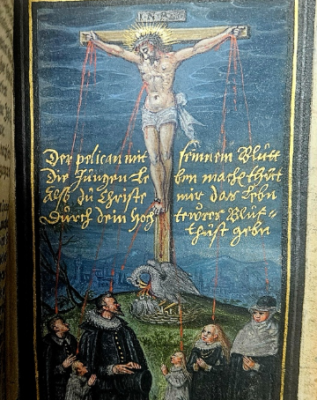
The host was as central to Christian worship as it became controversial during the Reformation era because of its materiality. Saints’ relics, too, came to be contested for the meaning and power attributed to mortal remains, leading to condemnation and rejection in Protestant denominations, along with renewed justifications in reformed Catholicism. Yet even Protestant prohibitions of relics did not prevent their re-emergence under different guises. How, then, did signification work in any of these objects? How was this achieved or reinforced by their presentation (e.g., in reliquaries) and setting? What role did their materiality continue to play? Sacred images, of course, also generated contentious debates about their material substrates. Artists exploited a wide range of materials and techniques to convey religious messages and guide the devotional or contemplative uses of images. How were images employed in all these contexts to support the veneration of the host, relics, or other sacred objects or substances? In the context of extra-European missions, what role did the host, relics, images, and other religious artifacts play among newly converted populations and among (free or unfree) migrant populations? To what extent did polemics against non-Christian, indigenous religions revolve around their presumed idolatry and materialism? We intend to explore these questions across confessional or religious boundaries and in a broadly interdisciplinary fashion, attentive to historical contextualization of the objects, debates, or practices we will study. Topics range from those that consider popular pious practices (or contestation thereof) as well as theological debates or reforms in devotional arts and literature.
Download the full program here.