The Stadhuismuseum Zierikzee, the municipal museum of Schouwen-Duiveland, in the northern part of the Zeeland region of the Netherlands, will open a new exhibition on the 17th-century portrait-painter Cornelius Jonson van Ceulen on 15th January 2026.
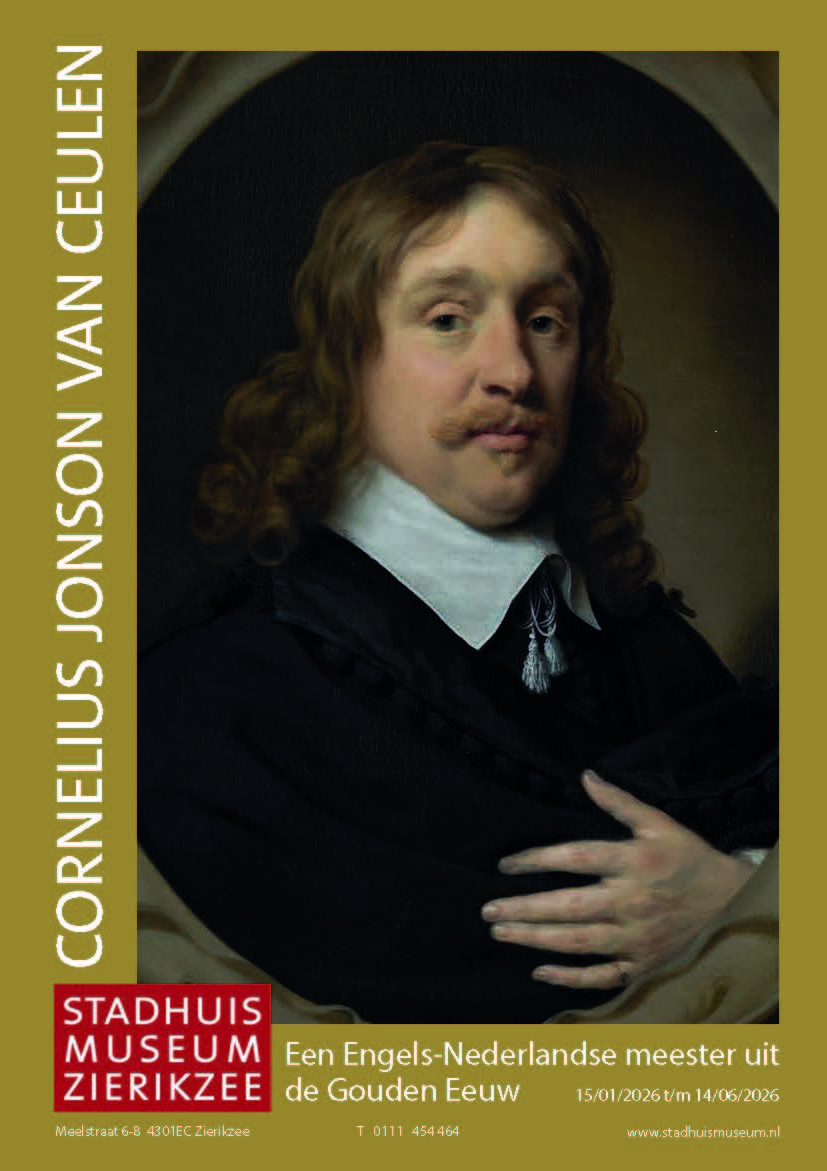 The exhibition, which has been curated by British art historian hon. prof. Karen Hearn, will feature loans from major European museums including Tate, the Gemäldegalerie Alte Meister Dresden, and the Rijksmuseum. Jonson’s 1650 painting of Jan Beck and his five children has been conserved especially for the exhibition by the Mauritshuis.
Cornelius Jonson (1593-1661) was born into a Flemish-German migrant family in London. There, he became a prolific and successful portrait-painter. In 1632, he was appointed ‘picture-drawer’ to king Charles I and queen Henrietta Maria, for whom he created small-scale depictions of members of the royal family.
In 1643, after the outbreak of civil war in Great Britain, Jonson migrated with his wife and son to the Northern Netherlands, where he initially settled in Middelburg and immediately received commissions to paint portraits of the city’s elite. He later worked in Amsterdam, The Hague, and again in Middelburg, before finally settling in Utrecht in 1652, where he remained a prominent portrait-painter until his death.
Known today in Britain as ‘Cornelius Johnson’, he chose to adopt the name ‘Cornelius Jonson van Ceulen’ in Middelburg in 1649. Jonson’s surviving works are all portraits. He painted on every scale, from small portrait miniatures to large group portraits.
This exhibition, which focuses principally on works from Jonson’s Dutch years, will run until 14th June 2026; an accompanying publication is being published by W BOOKS (Karen Hearn Cornelius Jonson van Ceulen). It is available in both English- and Dutch-language editions.
For more information on the exhibition, the accompanying publication, or for photographs: info@stadhuismuseum.nl