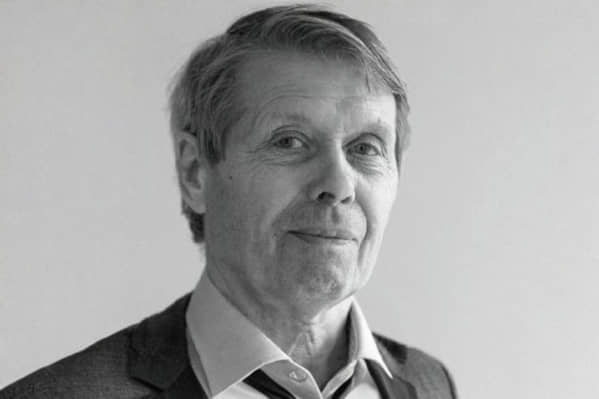
 Less than two weeks after the death of his close friend Konrad Renger, Jeroen Giltaij passed away on 1 December 2025. For decades, Jeroen was the face of the old masters collection at Museum Boijmans Van Beuningen in his hometown of Rotterdam. After studying art history at the University of Amsterdam, where he graduated in 1972 with a master’s thesis on the drawings of Jacob van Ruisdael, he began his career at the museum as curator of drawings. When Wim Beeren became director in 1978, he asked Jeroen if he would like to switch to old master paintings and sculptures, a collection area that had always been managed by the director until then. With his characteristic dedication, Jeroen remained chief curator of this department until his retirement in 2012.
Beeren focused entirely on contemporary art, and Jeroen was informed that there would be no exhibitions or acquisitions relating to old masters. But, typically of Jeroen, they did happen, although not as many as he would have liked: Cornelis van Haarlem’s overwhelming, Falling Ixion was purchased, and he organized the groundbreaking exhibition on European oil sketches ((Schilderkunst uit de eerste hand: olieverfschetsen van Tintoretto tot Goya, in collaboration with the Herzog Anton Ulrich Museum in Braunschweig). A golden age dawned for Jeroen when Wim Crouwel became director in 1985. Crouwel gave the museum’s various departments a great deal of freedom and Jeroen burst into action: one painting after another was restored and technically examined, exhibitions such as Perspectives. Saenredam and the architectural painters of the 17th century (1991) were organized and acquisitions were made. Jeroen’s great love was 17th-century Dutch art, but because that was already being collected by the Rijksmuseum and the Mauritshuis, he focused on foreign countries. His most original acquisition was Belisarius Receiving Alms by Mattia Preti, an artist completely unknown in the Netherlands, whom he had come to know and admire during his research for his dissertation on the Sicilian nobleman Antonio Ruffo, who had bought paintings from Rembrandt. Italian Baroque at its best, it was a tremendous acquisition not only for the Boijmans but for the whole of the Netherlands. The most beautiful painting he acquired was Cornelis van Dalem, The Beginning of Civilization, a sublime sixteenth-century landscape that effortlessly holds its own alongside Bruegel’s Tower of Babel.
At that time, Jeroen also began setting up the series of collection catalogues, in which the museum’s holdings were presented according to theme. The first in the series was about the Dutch Italianate painters, followed by Rembrandt and his school, painting from Van Eyck to Bruegel, seventeenth-century portraits and seventeenth-century still life, among others. In many cases, a specialist was asked to write the catalogue, but just as often Jeroen himself contributed a large number of entries to a volume. When a collection catalogue was published, it was invariably accompanied by an exhibition in which all the paintings described were on display.
After Crouwel, other directors followed with whom the collaboration was less smooth, but under whom he also achieved wonderful things. The aforementioned Van Dalem was purchased and exhibitions such as Praise of Ships and the Sea. The Dutch Marine Painters of the 17th Century (1996-1997, together with the Gemäldegalerie in Berlin), Dutch Classicism in 17th-Century Painting (1999-2000, together with the Städelsches Kunstinstitut in Frankfurt), Senses and Sins. Dutch Painters of Daily Life in the Seventeenth Century (2004-2005, again with the Frankfurt museum), Willem Kalf (2006-2007, together with the Suermondt-Ludwig Museum in Aachen) and Early Dutch Painters. Painting in the Late Middle Ages (2008) were organized.
Jeroen devoted himself heart and soul to the paintings and sculptures of Museum Boijmans Van Beuningen, but he could never forget drawing, his first and perhaps deepest love. As curator of drawings, he began with the catalogue of Rembrandt drawings in the Rotterdam museum, which was published in 1988. Throughout his life, he published on the drawings of Jacob van Ruisdael, but also on the drawings of lesser-known landscape painters such as Jan van Kessel, Jan (I) van der Meer, Guilliam du Bois, Claes van Beresteyn and Adriaen Verboom. His passion for the Dutch landscape and the artists who depicted it can be traced back to his childhood, which he spent in the coastal town of Zandvoort. As a boy, he would wander through the dunes for hours, alone or with his father, the artist Pieter Giltaij, who would sketch what they saw.
After his retirement, Jeroen remained incredibly active and published one book after another. In 2017 the extensive catalogue raisonné of Jan de Braij (2017) appeared, an artist he greatly admired. However, Jeroen’s greatest love was for Rembrandt. This was reflected in a series of books: Titus, zoon van Rembrandt (2018), Het grote Rembrandt boek. Alle 684 schilderijen (2022), Rembrandt, 100 tekeningen (2022 together with his lifelong friend Peter Schatborn) en De vrouwen van Rembrandt, Saskia, Geertje, Hendrickje (2023).
In recent years, Jeroen had health problems that made walking difficult. His death after a short illness came as an unexpected shock to many. I worked very closely with Jeroen at Museum Boijmans Van Beuningen for twenty years. I miss his infectious humour, his irony, his directness, but perhaps most of all the passionate way in which he spoke about art and artists.
–Friso Lammertse